Tuesday, 15 September 2026
Shelf Data & Shadow IT: 10 Indian Product Ideas
We are looking at a brutal week for legacy food claims and a massive shift in how software is deployed. FSSAI is tearing through dark stores and old-school FMCG brands with over 150 compliance notices, exposing the soft underbelly of Indian quick commerce and legacy label claims. Meanwhile, the developer community is actively abandoning micro-SaaS subscriptions in favour of self-hosted AI agents. Here are 10 highly specific wedges to exploit these shifts in the Indian market today.
FMCG & Logistics: The Compliance Premium
- 01
Zero-Claim Transparent Syrups
FMCG / Health
- The idea
- A daily staple brand (starting with a simple digestive syrup or adult supplement) that makes zero marketing claims, leading entirely with FSSAI-compliance and raw ingredient origin.
- Why now
- FSSAI just launched a massive crackdown, issuing over 150 notices to major food brands—including Old Monk and various digestive syrups—for misleading claims and artificial flavouring, severely denting consumer trust in legacy labels.
- Global precedent
- RXBAR (US), whose entire front-of-pack identity is '3 egg whites, 6 almonds, 4 cashews, 2 dates, No B.S.'
- The India-specific gap
- Legacy Indian FMCG is built on obfuscated ingredients and exaggerated health claims. This regulatory sweep creates a massive wedge for a brand whose entire USP is radical, boring label transparency in a high-trust category.
- One real risk
- Operating with absolute transparency invites extreme regulatory and competitor scrutiny; a single supply chain contamination ruins the entire brand.
- 02
Dark-Store Compliance API
B2B / Logistics SaaS
- The idea
- An API layer that plugs directly into quick-commerce inventory systems to automate FSSAI batch-tracking, hard-stop near-expiry items, and manage local licenses.
- Why now
- Swiggy Instamart just received 9 direct FSSAI notices for operating dark stores with expired goods, rotten food, and mismatched licenses—exposing a critical operational failure in 10-minute delivery.
- Global precedent
- SafetyChain Software and Compliance.ai in the US, which automate food quality and regulatory reporting.
- The India-specific gap
- Zepto, Blinkit, and Swiggy are scaling node-count faster than their compliance operations can handle. A third-party API that acts as an automated FSSAI audit log prevents catastrophic regulatory shutdowns.
- One real risk
- The big three quick-commerce players might prefer to brute-force build this internally rather than relying on a third-party startup for core compliance.
- 03
Fast-Track Premium Ingredient Importer
Supply Chain / B2B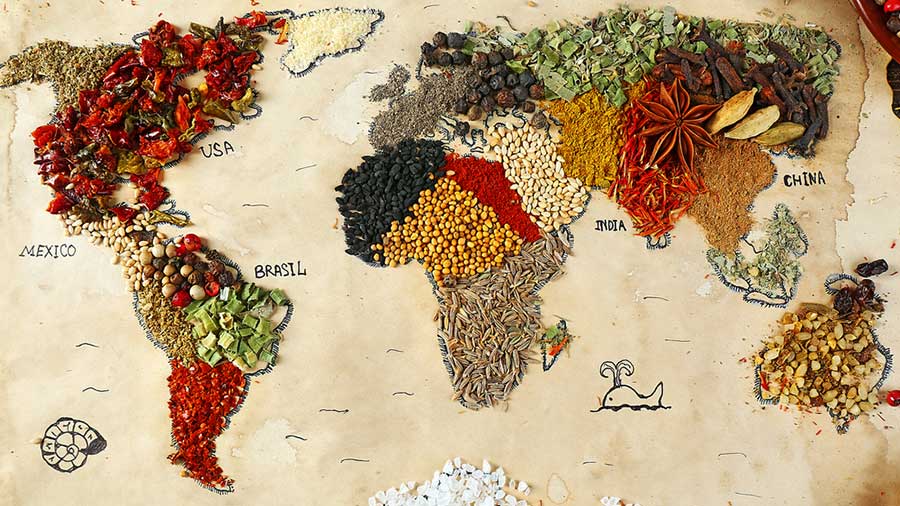
- The idea
- A sourcing-as-a-service platform that secures and fast-tracks premium niche ingredients (ceremonial matcha, specific whey isolates, adaptogens) for Indian D2C food brands.
- Why now
- FSSAI has just completely removed customs clearance bottlenecks for imported food ingredients intended for domestic processing and re-export, drastically cutting import times.
- Global precedent
- Twiga Foods (Kenya) and Kojo (UK), which use tech to streamline fragmented agricultural supply lines.
- The India-specific gap
- Indian premium D2C brands constantly struggle with raw material inconsistency. This policy change allows a tech-enabled distributor to build a highly profitable pipeline of global ingredients without the traditional red tape.
- One real risk
- Requires heavy upfront working capital and cold-chain infrastructure to secure the international supply side before local D2C brands sign purchasing contracts.
Technology & SaaS: The AI Agent Shift
- 04
Zero-SaaS Business Agent
Vertical AI / B2B
- The idea
- A self-hosted, vertical AI agent configured specifically for Indian micro-businesses to entirely replace their CRM, scheduling, and customer support software.
- Why now
- A massive thread trending on Hacker News this week details a user dumping $500/month in standard SaaS tools by deploying a single AI agent on a Mac Mini—signalling a shift from renting software to installing agentic labour.
- Global precedent
- OpenClaw, the open-source agent framework that replaces multiple SaaS subscriptions.
- The India-specific gap
- Indian SMEs are notoriously hostile to recurring SaaS fees. Instead of selling them a $50/mo CRM, sell a one-time setup or pure-performance WhatsApp agent that actually does the administrative work.
- One real risk
- The agent relies entirely on underlying LLM stability; an API update or context hallucination can break the entire business workflow overnight.
- 05
DPDP Shadow IT Scanner
Enterprise Security
- The idea
- An automated compliance scanner for Indian enterprises that maps employee OAuth grants to unearth shadow AI tools that violate data protection laws.
- Why now
- A 'Shadow IT Scan' tool launched to top traction on Show HN this week, highlighting a severe global enterprise blind spot just as Indian companies scramble to map data flows under the DPDP Act.
- Global precedent
- Vanta and Shadow IT Scan (US).
- The India-specific gap
- Indian IT teams have zero visibility into how many generic AI wrappers their employees are connecting to corporate Google/Microsoft accounts. This is an immediate DPDP liability and an easy enterprise sell.
- One real risk
- Enterprise sales cycles in India are notoriously slow, even when selling urgent regulatory compliance.
- 06
Regional Listing Auto-Localiser
E-commerce SaaS- The idea
- A tool that uses Search Console data to automatically rewrite and localise product titles and meta tags for tier-2/3 Indian languages on ONDC and Amazon India.
- Why now
- Developers are actively shipping MCP (Model Context Protocol) servers that bridge AI directly to search analytics, as seen in the trending 'Search Console AI' launch this week.
- Global precedent
- Search Console AI connected to Claude/Codex.
- The India-specific gap
- Indian D2C brands struggle with multilingual search intent across non-metro cities. An AI tool that automatically adapts listings based on real regional search data would give them an immediate edge on ONDC.
- One real risk
- Amazon and ONDC could alter their algorithms to penalise listings that undergo rapid, automated metadata changes.
- 07
AI Video Engine for Static Catalogues
Creator Tech
- The idea
- A micro-SaaS that automatically ingests static Shopify product catalogues and converts them into high-retention AI video shorts for Instagram Reels.
- Why now
- EndFrame just launched to huge traction on Hacker News by automating promotional video creation, proving the aggressive demand for low-effort video assets.
- Global precedent
- EndFrame (US) and Captions.ai.
- The India-specific gap
- Indian D2C brands are completely dependent on Instagram Reels to lower CAC, but video production is a massive margin drain. Automating static-to-video for trend sounds is a pure ROI play.
- One real risk
- Meta frequently adjusts the Instagram algorithm to actively detect and suppress low-effort, AI-generated template videos.
- 08
Edge-AI AgriTech Cameras
Hardware / B2B
- The idea
- Privacy-first, edge-AI camera systems for Indian high-value agriculture (saffron, export-grade tea) to monitor crop health locally without needing a cloud connection.
- Why now
- Croplock, an edge-AI device for analyzing cannabis grows locally, just trended heavily, proving that high-yield growers want tech that keeps proprietary data strictly on the LAN.
- Global precedent
- Croplock (US).
- The India-specific gap
- Indian precision farming software relies heavily on cloud processing, which constantly fails in rural areas with poor 4G/5G. Hardware that processes disease and yield data locally solves the biggest friction point in the market.
- One real risk
- Hardware distribution and maintenance in rural India requires massive feet-on-the-street operations that eat into margins.
Lifestyle & Consumer: The Material Pivot
- 09
Plastic-Free Performance Activewear
D2C Fashion
- The idea
- High-performance, fully plastic-free activewear built specifically to handle the extreme heat and humidity of the Indian climate.
- Why now
- Yoga giant Adriene Mishler just launched VETA to massive fanfare, focusing entirely on intentional, plastic-free movement wear—highlighting a fast-growing backlash against microplastics in gym gear.
- Global precedent
- VETA (US) and Pangaia (UK).
- The India-specific gap
- Every major Indian activewear brand relies heavily on polyester/spandex blends that trap heat. A premium, breathable alternative using advanced cotton/bamboo composites would command a massive margin in tier-1 cities.
- One real risk
- True plastic-free fabrics often lack the extreme stretch and aggressive compression that consumers are currently used to from mainstream brands.
- 10
Inside-Out Beauty Protocol
D2C Personal Care
- The idea
- A hybrid beauty brand that only sells bundled 'protocols'—a high-potency topical serum paired directly with a bioavailable ingestible supplement—targeting urban stress and pollution.
- Why now
- Venture data published this week confirms that while general consumer e-commerce funding has cooled, D2C health and wellness (specifically supplements and personal care) remains the most heavily backed consumer category globally.
- Global precedent
- Moon Juice (US) and JSHealth (Australia), which bridge clinical skincare and functional nutrition.
- The India-specific gap
- The Indian market is saturated with standalone topical serums and separate supplement brands, but no one is selling a unified 'inside-out' protocol with high-end clinical branding for tier-1 consumers.
- One real risk
- Customer acquisition for supplements requires intense, sustained education, making the initial CAC significantly higher than that of standard colour cosmetics.
Try This Week
- Run an audit of all SaaS tools your team uses and kill any that a self-hosted AI agent could handle.
- Check the FSSAI compliance of the top 3 ingredients in your FMCG supply chain—Swiggy just proved the grace period is over.
- Search your brand name on ONDC via tier-2 regional language queries to see where your SEO is breaking down.