Wednesday, 29 July 2026
Today's Blueprints
Here are 10 highly specific product and brand opportunities based on the latest shelf data, cross-border funding, and developer trends. We are looking at everything from climate-adaptive workwear and clinical scalp care to WhatsApp-native SaaS and vernacular AI infrastructure.
Digital Products & B2B SaaS
- 01
Localized AI Agents for Indian Compliance
B2B SaaS
- The idea
- A suite of plug-and-play AI agents explicitly trained on Indian GST law, TDS compliance, and MCA filings, acting as a direct copilot for SME accounting teams.
- Why now
- The rise of hyper-local AI infrastructure, like the launch of localskills.sh on Product Hunt this week, shows a shift from generic LLMs to specialized, enterprise-grade server management.
- Global precedent
- Harvey in the legal space, or specialized tax copilots currently scaling in the US.
- The India-specific gap
- Generic LLMs frequently hallucinate Indian tax codes. SMEs require highly localized, restricted agents that integrate natively with legacy tools like Tally.
- One real risk
- A single hallucinated output resulting in a GST penalty will instantly destroy brand trust and invite regulatory backlash.
- 02
WhatsApp-First AI Booking Agent
B2B Tech
- The idea
- A zero-interface AI receptionist built directly on WhatsApp to handle bookings, cancellations, and FAQs for local Indian salons and clinics.
- Why now
- The launch of Estera on July 27 proves the immediate demand for 24/7 AI receptionists that integrate natively with messaging platforms.
- Global precedent
- Estera (global), Truecaller's AI assistant features.
- The India-specific gap
- Indian SMBs run entirely on WhatsApp but refuse to download separate CRM software; they need the automation to live where their customers already text them.
- One real risk
- Unpredictable changes to Meta's WhatsApp Business API pricing could wipe out the tight margins required to sell to Indian SMBs.
- 03
In-Browser Vernacular Audio Widget
Publisher SaaS
- The idea
- A B2B widget for Indian regional publishers that instantly converts written vernacular articles into natural-sounding audio streams directly on the webpage.
- Why now
- Liso launched on July 24 to turn highlighted text into audio instantly, signaling a major push for seamless, embedded audio consumption.
- Global precedent
- Liso, Speechify's B2B publisher tools.
- The India-specific gap
- Tier-2 internet users heavily prefer audio-visual content over reading, yet regional publishers lack the technical infrastructure to generate native, accurate vernacular audio feeds.
- One real risk
- Regional news platforms already operate on razor-thin ad margins and may balk at paying a recurring SaaS fee.
- 04
Quick-Commerce Middleware for Legacy Retail
Retail Tech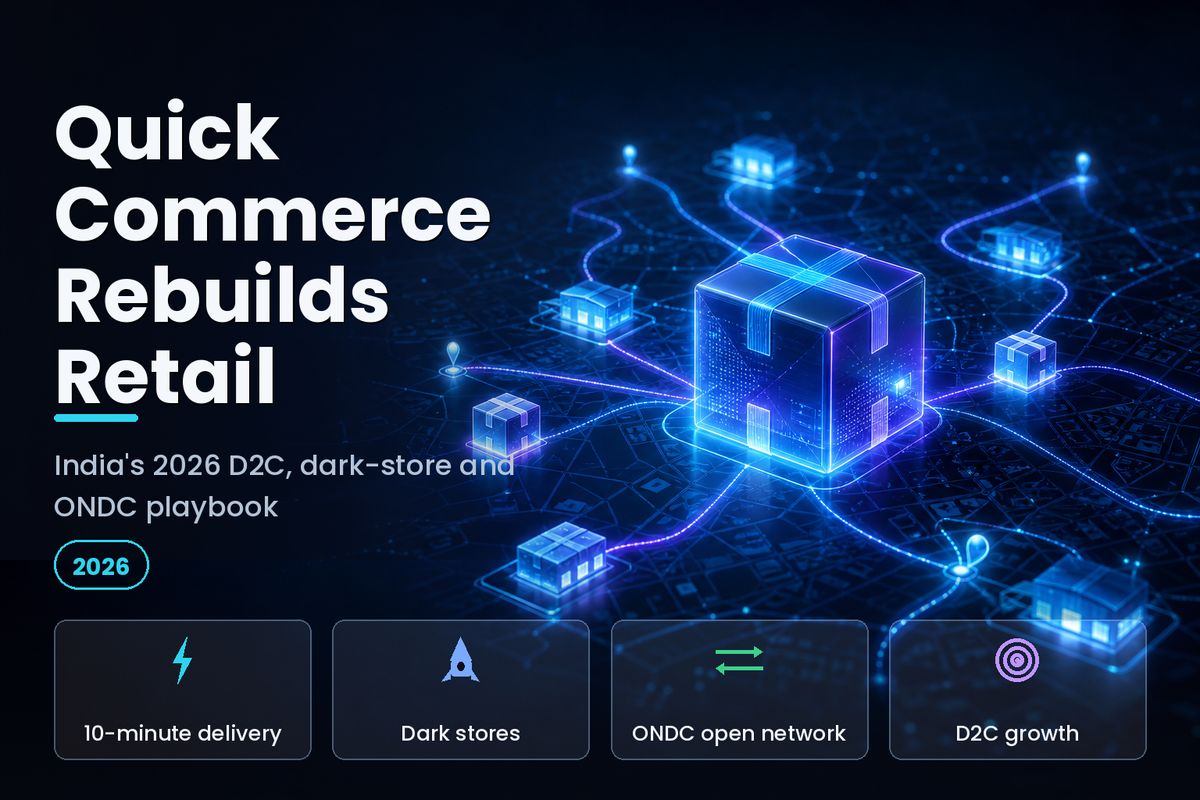
- The idea
- Plug-and-play middleware that syncs a traditional Indian offline retailer's local inventory instantly with Blinkit, Zepto, and ONDC simultaneously.
- Why now
- A mid-2026 retail transformation report highlighted that two-thirds of new D2C demand now comes from Tier-2/3 cities, with buyers demanding rapid quick-commerce availability.
- Global precedent
- ChannelAdvisor or Linnworks, but rebuilt for 10-minute delivery nodes rather than traditional e-commerce.
- The India-specific gap
- Traditional Indian billing software doesn't communicate with modern quick-commerce platforms, forcing retailers to rely on manual, error-prone data entry.
- One real risk
- The major quick-commerce players could build and give away these integrations for free to lock merchants into their specific platforms.
Consumer Apps & Networks
- 05
High-Trust Campus Micro-Networks
Consumer App
- The idea
- A gated, invite-only micro-social network specifically for top-tier Indian college campuses, focused entirely on high-trust peer recommendations and localized events.
- Why now
- Yope raised $12.3M this week to build a private social network devoid of algorithms or ads, proving the growing backlash against open-network doomscrolling.
- Global precedent
- Yope, Fizz, or the early iteration of Facebook.
- The India-specific gap
- Indian Gen-Z are increasingly fatigued by the algorithmic chaos of mainstream platforms, leaving zero premium, verified digital space for hyper-local campus culture.
- One real risk
- Indian consumers historically resist paying for social products, making an ad-free monetization model extremely difficult to scale.
- 06
AI-Moderated Intent-Based Matchmaking
Consumer App- The idea
- A high-intent matchmaking app for urban Indians that replaces endless swiping with AI-facilitated introductions based on deep lifestyle and cultural alignment.
- Why now
- The founder of Hinge just raised $18M for Overtone to build a new AI dating service, signaling a massive shift away from the legacy swipe-mechanic.
- Global precedent
- Overtone, Keeper.
- The India-specific gap
- Modern Indian singles are burnt out by commoditized dating apps but find traditional matrimonial sites too regressive; they need a tech-enabled, highly vetted middle ground.
- One real risk
- Building a proprietary, high-quality user base is notoriously slow, and initial customer acquisition costs will be astronomical.
Physical D2C, Beauty & Lifestyle
- 07
Premium Preventative Health Clinics
Lifestyle / Health
- The idea
- A network of boutique longevity clinics in Indian metros offering premium preventative health screenings like DEXA scans and advanced blood panels in a hospitality-led environment.
- Why now
- Daniel Ek's Neko Health secured a massive $700M Series C round in mid-July 2026 to aggressively expand its AI-powered preventative full-body scanning clinics.
- Global precedent
- Neko Health (Europe), Function Health (US).
- The India-specific gap
- Preventative diagnostics in India are currently dominated by highly clinical, illness-focused labs; there is zero premium infrastructure for the biohacking-curious affluent class.
- One real risk
- The upfront capital expenditure required for medical-grade scanning hardware is immense, necessitating huge sunk costs before brand equity is established.
- 08
Climate-Adaptive Women's Workwear
Fashion / D2C- The idea
- A digitally native womenswear brand designing structured, modern formalwear using proprietary sweat-wicking and breathable fabrics engineered for Indian summers.
- Why now
- Roll-up giant Mensa Brands is targeting profitability by doubling down on proven category leaders in fashion, moving the market away from generic dropshipping to high-retention apparel.
- Global precedent
- Ministry of Supply, M.M.LaFleur.
- The India-specific gap
- Current workwear options force Indian women to choose between fast-fashion polyester that traps heat or traditional cottons that wrinkle instantly during commutes.
- One real risk
- Sourcing and manufacturing technical performance fabrics at accessible price points is incredibly complex within the domestic Indian supply chain.
- 09
Clinical Scalp-Care for Hard Water
Beauty / Personal Care- The idea
- A minimalist, clinical haircare brand focusing exclusively on active-ingredient scalp serums designed to combat urban hard water and pollution in India.
- Why now
- Beauty and personal care dominated Inc42's FAST42 list unveiled this week, showcasing how Indian consumers are rewarding highly specialized, enduring physical brands over generic wellness.
- Global precedent
- Nutrafol, Ouai's scalp treatments.
- The India-specific gap
- The Indian market is saturated with traditional oil-based Ayurvedic claims, lacking modern chemical exfoliants engineered specifically for hard-water buildup.
- One real risk
- Educating consumers to abandon generational habits of traditional hair oiling in favour of clinical chemical exfoliants will be an expensive uphill battle.
- 10
Clean-Label Heritage Snacks
FMCG / D2C- The idea
- A premium quick-commerce brand that reimagines nostalgic regional Indian snacks using clean ingredients, zero palm oil, and high protein macros.
- Why now
- Inc42's FAST42 summit explicitly highlighted foodtech and consumer fundamentals, as FMCG giants desperately pivot toward premium D2C models to capture margin.
- Global precedent
- Magic Spoon, Siete (US).
- The India-specific gap
- The savory snack market is ruled by hyper-processed legacy brands; health-conscious urbanites currently have to settle for sweet protein bars rather than culturally resonant savory snacks.
- One real risk
- Using premium, clean-label ingredients prices the product out of mass retail, making survival entirely dependent on the limited density of top-tier urban quick commerce.
Try This Week
- Look at what's winning on Product Hunt today and map it against purely Indian workflows.
- Examine offline regional brands that lack the tech stack to integrate with quick commerce.
- Audit your current SaaS stack for tools that could be completely replaced by native WhatsApp interfaces.