Friday, 31 July 2026
Unfunded Signals & Shelf Gaps
I don't care what generalist funds are hyping; I care about what's actually shifting in supply chains, compliance frameworks, and developer forums right now. Here are 10 verifiable product gaps drawn directly from this week's retail footprint data, FSSAI rulings, and front-page maker launches.
Physical Goods & Retail Footprint
- 01
Q-Commerce Optimized Beauty
FMCG / Beauty- The idea
- A high-margin, trial-sized skincare brand explicitly designed for 10-minute delivery with sturdy, minimal packaging and a sub-₹400 impulse price point.
- Why now
- Retail data published this week shows quick-commerce platforms like Blinkit now drive up to 50% of online sales for large brands, expanding D2C margins by ~130 bps as baskets expand beyond groceries.
- Global precedent
- Starface (US) dominates the impulse-buy checkout category with fast-moving, high-margin acne patches.
- The India-specific gap
- Indian D2C beauty relies on bulky glass or heavy plastic bottles designed for 3-day logistics; q-commerce demands impulse-buy, compact, entirely breakage-proof SKUs.
- One real risk
- Quick-commerce platforms demand steep listing margins and up to 18 months for brand onboarding, destroying early cash flow.
- 02
FSSAI-Compliant rPET Supplier
B2B / Packaging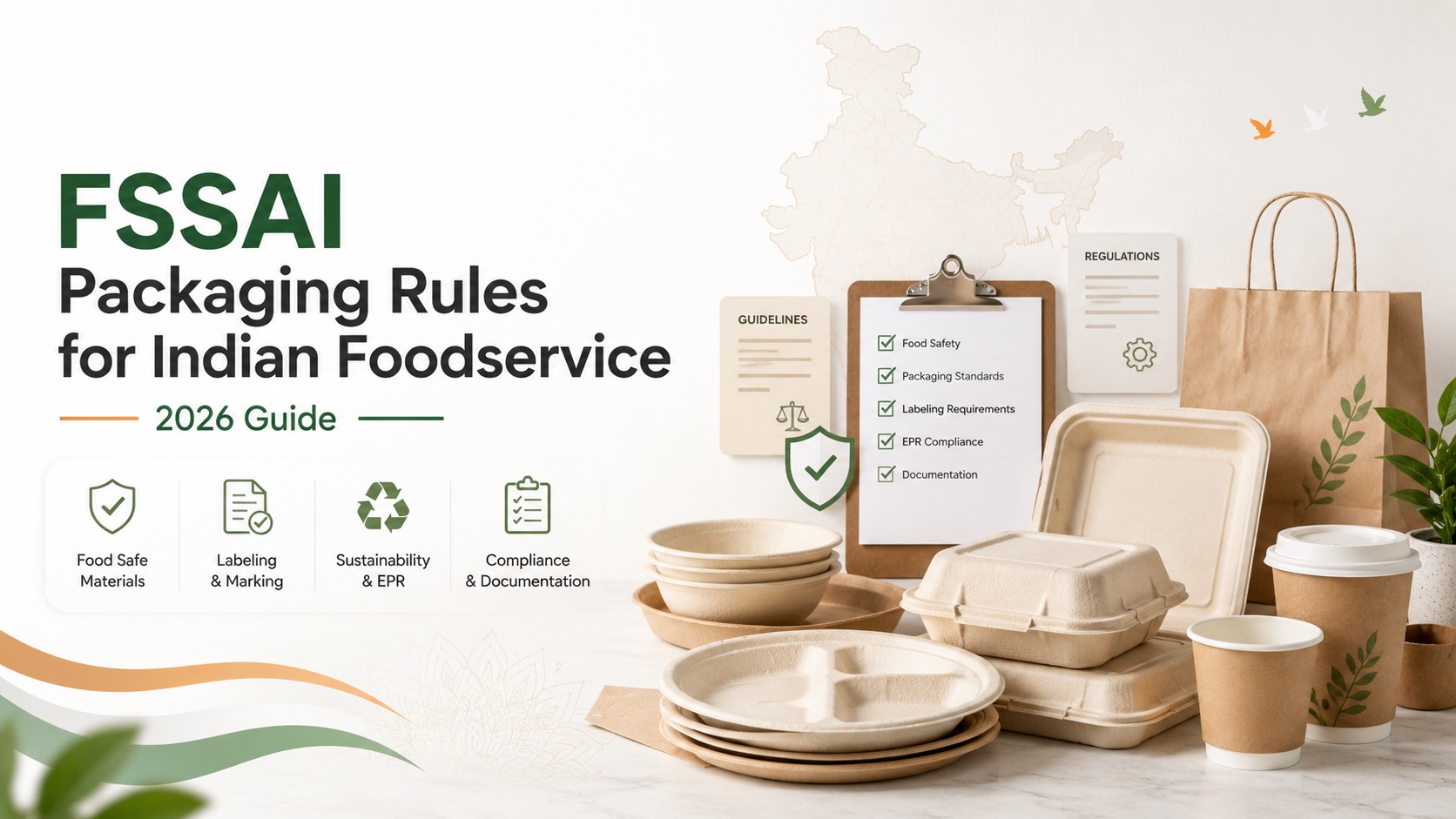
- The idea
- A specialized B2B packaging manufacturer providing certified food-safe recycled PET (rPET) containers and closures tailored for mid-market D2C food brands.
- Why now
- The FSSAI First Amendment Regulations have just formally allowed the use of recycled PET in food-contact materials, opening a massive compliance-driven market for sustainable packaging.
- Global precedent
- Footprint (US) and Amcor's specialized sustainable packaging divisions.
- The India-specific gap
- Most Indian packaging MSMEs only offer virgin plastic or uncertified recycled materials, leaving D2C brands without a legal way to claim sustainability on food labels.
- One real risk
- Contamination during the highly unorganized local recycling collection process makes scaling certified food-safe rPET incredibly expensive.
- 03
Strict Allergen-Free Pantry Staples
FMCG / Food
- The idea
- A premium line of Indian pantry staples (flours, snacks) guaranteed and certified 100% free from the top common allergens like soy, gluten, and nuts.
- Why now
- New FSSAI 2026 labeling rules now mandate highly visible, specific allergen declarations and strict descending-order ingredient lists on all consumer packaging.
- Global precedent
- Partake Foods (US) built a massive consumer brand purely by owning the allergen-free cookie category.
- The India-specific gap
- Existing Indian allergy-friendly foods are mostly imported and wildly expensive; there is no trusted, mass-premium local brand catering to rising celiac and nut allergy awareness in Tier 1 cities.
- One real risk
- Maintaining a perfectly uncontaminated local supply chain is notoriously difficult, bringing massive liability if cross-contamination occurs at the milling stage.
- 04
Virtual Trial AI Standee
Retail Tech / Hardware
- The idea
- A B2B2C vertical screen hardware unit for apparel stores that uses generative AI to visually drape garments onto a customer's reflection without them entering a dressing room.
- Why now
- Gokaldas Exports and PointAI just launched an 'AI Virtual Trial Standee' in India, signaling real commercial appetite for on-premise AI retail hardware.
- Global precedent
- Zeekit (acquired by Walmart) and Zyler (UK).
- The India-specific gap
- Indian D2C brands leased 6 lakh sq ft of retail space recently, but dressing room wait times during festive peaks destroy conversion. We lack a localized AI trained on Indian ethnic wear drapes and body types.
- One real risk
- If the AI drape looks even slightly hallucinatory or physically impossible, shoppers lose total trust in the fit and abandon the purchase.

Software, SaaS & Developer Tools
- 05
Local-First Enterprise AI Client
Enterprise SaaS
- The idea
- A desktop client for enterprise teams that runs capable open-source LLMs entirely locally for sensitive workflows without sending data to cloud APIs.
- Why now
- 'Rowboat,' a local-first open-source alternative to Claude Desktop, launched on Hacker News this week, highlighting severe developer anxiety over enterprise AI data exfiltration.
- Global precedent
- LM Studio and GPT4All, though they cater to solo developers rather than secure corporate teams.
- The India-specific gap
- Indian IT services and GCCs handle highly confidential offshore client IP but want AI productivity gains; they require a secure, local-first wrapper that legally guarantees data residency.
- One real risk
- Local hardware limitations in standard-issue enterprise laptops (lack of decent GPUs) will make the AI far too slow for non-technical users.
- 06
Ambient Medical Scribe for High Volume
Vertical SaaS
- The idea
- A DPDP-compliant ambient listening app for doctors that records consultations on a mobile device and auto-generates structured clinical notes specifically optimized for regional code-switching.
- Why now
- 'ClinicFrame' launched to the top of Product Hunt this week, branding itself as 'Granola for healthcare,' proving the agentic note-taker wedge is aggressively moving into high-compliance verticals.
- Global precedent
- Nabla (France) and Abridge (US).
- The India-specific gap
- Indian doctors see 3-4x the patient volume of US doctors. Existing Western tools fail entirely at parsing heavy Hindi-English medical code-switching.
- One real risk
- Indian clinics are notoriously price-sensitive regarding software and often prefer dictating to cheap human assistants over paying a monthly SaaS fee.
- 07
Micro-Presence Layer for D2C
B2B SaaS / Widgets
- The idea
- A lightweight widget for independent D2C storefronts that shows real-time active users and allows hyper-local, ephemeral micro-chat right on the product page.
- Why now
- 'TownSquare,' a tiny presence layer for websites, saw massive traction on Show HN this week, highlighting a stark consumer desire to re-humanize sterile web experiences.
- Global precedent
- Highrise (historically) or the early web 'guestbook' dynamic applied to modern Shopify stacks.
- The India-specific gap
- Indian D2C sites feel entirely transactional and lonely; injecting a lightweight community feel tailored to Indian Gen-Z aesthetics could meaningfully boost conversion.
- One real risk
- Unmoderated chat modules on retail sites inevitably devolve into spam, creating a brand safety nightmare for the merchant.
- 08
Agentic Mobile Keyboard
Consumer Tech / Productivity
- The idea
- A custom iOS/Android keyboard replacement that natively embeds small AI agents to fetch files, summarize links, or draft CRM updates without ever switching apps.
- Why now
- 'Acti,' an agentic keyboard for mobile commands, is currently trending as a top product of the month on Product Hunt.
- Global precedent
- Microsoft SwiftKey's Copilot integration or Typewise (Switzerland).
- The India-specific gap
- The entire Indian B2B workforce relies on WhatsApp for professional communication; a keyboard that acts as a CRM retrieval agent directly inside WhatsApp is a massive wedge.
- One real risk
- Apple and Google frequently break, throttle, or restrict third-party keyboard permissions in OS updates, making user retention nearly impossible.
- 09
Agent-First Version Control
Developer Tools
- The idea
- A localized version control system built specifically for AI coding agents, where the 'commits' are logical steps and visual states rather than raw text diffs.
- Why now
- 'Oak,' a Git alternative designed specifically for agents, just launched on Hacker News, validating the thesis that LLMs need different file-management structures than humans.
- Global precedent
- The ecosystem forming around Cursor and Devin, which increasingly bypasses traditional GitHub workflows.
- The India-specific gap
- India has the world's largest pool of junior IT service devs rapidly adopting AI to boost output; a cheaper, specialized version control alternative for agent-generated code could capture the entry-level market.
- One real risk
- GitHub will simply acquire the underlying methodology and build it natively into Copilot, wiping out standalone competitors overnight.
- 10
Micro-Fund CRM for Women Founders
Fintech / Data SaaS
- The idea
- A fundraising copilot and verified investor database exclusively designed to map active family offices and micro-VCs actively writing checks to women founders in India.
- Why now
- Tracxn data released this week reveals that while total India funding is stable, the number of rounds in women-founded startups fell drastically by 40%.
- Global precedent
- Fundraisly (an AI fundraising agent trending on Product Hunt) applied to the specific thesis of All Raise (US).
- The India-specific gap
- Generalist tools like Tracxn don't filter for the behavioral reality of which Indian family offices actually back female founders; a curated tool saves months of dead-end pitching.
- One real risk
- The TAM of female founders actively raising venture-scale capital in India might currently be too small to support a scalable, high-MRR SaaS product.
Try This Week
- Check your D2C brand's current FSSAI compliance regarding allergen descending orders.
- Test one open-source local LLM (like Llama 3 on LM Studio) for a sensitive internal workflow.
- Evaluate Blinkit listing requirements for your lowest-friction impulse SKU.